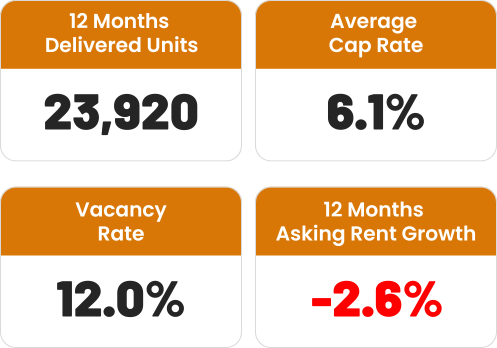
The Phoenix apartment market is experiencing a persistent imbalance between supply and demand. While leasing activity remains strong—17,000 units were absorbed over the past year, more than double the pre-COVID average—this demand is being overshadowed by a surge in construction. Over the same period, 24,000 new units were completed, and another 23,000 are under construction. This has pushed overall vacancy to 12.2%, with high-growth areas like Downtown Phoenix and Tempe seeing the most impact.
The oversupply has led to declining rents and increased concessions. Average asking rents dropped 2.6% year-over-year, with more than half of communities offering discounts such as six to eight weeks of free rent. Luxury properties have been hit hardest, with vacancies rising over 730 basis points and rents falling 2.5%, while more affordable units have seen a smaller 1.9% rent decline. Although a slowdown in construction starts may ease supply pressures by 2026, elevated vacancies are expected to continue, likely keeping rent growth negative through 2025.
Phoenix MULTIfamily Market FAQ
1. What is the current state of the Phoenix multifamily market?
The market is facing a supply-demand imbalance. While leasing activity is strong, a record-setting wave of new construction has pushed vacancy rates higher and caused rents to decline.
2. How much new apartment supply has been added recently?
In the past 12 months, 24,000 new units were completed—more than triple the pre-2019 average. An additional 23,000 units are under construction, representing 5.5% of the city's existing inventory.
3. How is demand holding up?
Demand is strong, with 17,000 units absorbed over the past year, ranking Phoenix among the top 10 U.S. markets for apartment demand. However, this is not enough to offset the flood of new supply.
4. What is the current vacancy rate?
The overall vacancy rate has risen to 12.2%, with the highest vacancies in areas like Downtown Phoenix, Tempe, and the Southwest Valley.
5. How are rents being affected?
Average asking rents have declined 2.6% over the past year. Luxury properties have seen a 2.5% rent drop, while more affordable 1 & 2 Star properties saw a 1.9% decline.
6. Are landlords offering rent concessions?
Yes, more than half of multifamily communities are offering discounts. Lease-up properties often provide six to eight weeks of free rent, and some concessions are extending beyond that.
7. Which segments are being impacted the most?
High-end/luxury apartment communities are facing the brunt of oversupply pressures, while workforce housing has been more resilient but still affected.
8. What’s the outlook for the market?
A slowdown in construction starts may ease pressure by 2026, but elevated vacancy levels and excess inventory are expected to keep rent growth negative through 2025.

:format(webp):quality(80)/u.realgeeks.media/capcorerealestate/badge_trans.png)
:format(webp):quality(80)/u.realgeeks.media/capcorerealestate/Facebook.jpg)