Phoenix Real Estate and Community News

Aug. 31, 2026

Phoenix MULTIFAMILY Market Report August 2026


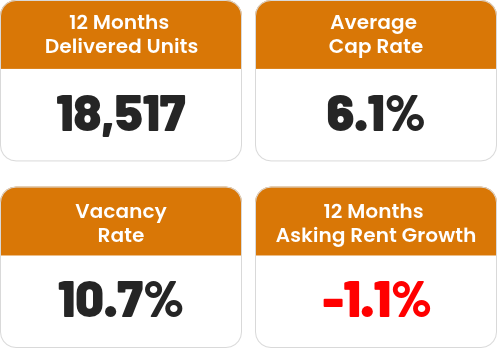
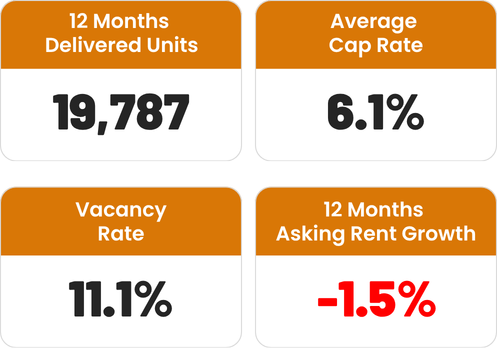
The Phoenix apartment market is showing signs of recovery, with strong renter demand helping offset the impact of elevated supply. The Valley recorded 23,000 units of net absorption over the past 12 months, significantly above the pre-COVID average of 7,200 units and ranking Phoenix among the top five U.S. markets for demand. At the same time, new construction has slowed, with 20,000 units delivered and only 17,000 units currently under construction—down 50% from the peak. This has helped vacancy improve to 11.1%, although it remains historically high.


Despite improving fundamentals, the market continues to face oversupply and rent pressure, particularly in Downtown Phoenix, Tempe, and the Southwest Valley. Average asking rents declined 1.5% year-over-year, while property owners continue offering significant concessions, including 10+ weeks of free rent at some newly built properties. Looking ahead, the shrinking construction pipeline should provide additional relief, with new deliveries expected to return closer to pre-pandemic levels by 2027. Vacancy is expected to gradually decline as the market absorbs recent supply, while rent growth will likely remain negative in the near term but should avoid the sharper declines seen in 2025.


Phoenix MULTIfamily Market FAQ


1. What is the current state of the Phoenix multifamily market?

The Phoenix multifamily market is showing signs of recovery after several years of heavy new construction. Demand has strengthened significantly, while the pace of new development has slowed, helping improve vacancy. However, the market is still dealing with elevated vacancy and negative rent growth.


2. How strong is apartment demand in Phoenix?

Demand remains one of the market’s strongest fundamentals. Phoenix recorded approximately 23,000 units of net absorption over the past 12 months, well above the pre-COVID five-year average of 7,200 units. This places Phoenix among the top five U.S. markets for apartment demand.


3. Is oversupply still a concern?

Yes. While the construction pipeline has slowed considerably, certain submarkets—including Downtown Phoenix, Tempe, and the Southwest Valley—still face higher risks of oversupply due to the large number of recently completed and under-construction units.


4. Is Phoenix still overbuilt?

Yes, although the situation is improving. About 17,000 units are currently under construction, which is 50% below the recent peak but still represents roughly 3.9% of existing inventory. Areas such as Downtown Phoenix, Tempe, and the Southwest Valley remain more exposed to oversupply.


5. What is the current vacancy rate?

Overall multifamily vacancy has improved to approximately 11.1%. While this is an improvement, vacancy remains near the highest levels seen since the recovery from the Global Financial Crisis.


6. Are apartment rents increasing or decreasing?

Rents are still declining. Average asking rents decreased approximately 1.5% year-over-year. Property owners are also using larger concessions, including significant discounts and, in some newly built communities, 10+ weeks of free rent to attract residents.


7. What is driving demand in Phoenix?

Relative affordability, employment opportunities, and continued population growth are supporting renter demand. Phoenix remains one of the fastest-growing markets in the country, which provides a strong underlying demand base for multifamily housing.


8. What is the outlook for Phoenix multifamily?

The outlook is cautiously improving. The rapidly shrinking construction pipeline should reduce supply pressure, with annual deliveries expected to move closer to pre-pandemic levels by 2027. Vacancy should gradually decline as the market absorbs the large amount of inventory delivered over the past few years. Rent growth is likely to remain negative in the near term, but a decline as severe as what Phoenix experienced in 2025 is not expected.


Posted in CoStar Report
July 31, 2026

Phoenix MULTIFAMILY Market Report July 2026


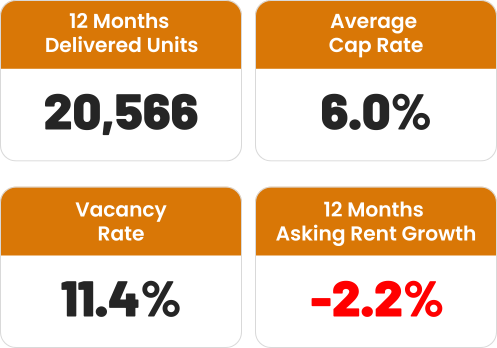
The Phoenix apartment market started 2026 on a strong note, with record-high renter demand helping balance new apartment deliveries for the first time since 2021. Over the past 12 months, net absorption reached 22,000 units, significantly exceeding historical averages and positioning Phoenix among the nation's top apartment markets for demand. Vacancy improved to 11.4% as supply and demand came into balance, although elevated inventory from recent years continues to weigh on overall market performance, particularly in Downtown Phoenix, Tempe, and the Southwest Valley.


Despite improving fundamentals, average asking rents declined 2.2% year over year as property owners continued offering aggressive concessions to attract renters. However, the construction pipeline has been cut in half from its peak, which is expected to reduce supply pressure over the next two years. As new deliveries slow, vacancy is projected to gradually decline and rent performance is expected to stabilize, making another sharp rent decline like 2025 unlikely.

Phoenix MULTIfamily Market FAQ


1. What is the current state of the Phoenix multifamily market?

The Phoenix multifamily market is showing signs of recovery after several years of elevated apartment deliveries. Strong renter demand has helped absorb much of the new supply, leading to improving occupancy and a more balanced market, although vacancy remains above historical norms.


2. Why is renter demand so strong?

Phoenix continues to attract new residents due to its relative affordability, job opportunities, and population growth. Over the past year, renter demand significantly exceeded historical averages, placing Phoenix among the top U.S. markets for apartment demand.

3. Is oversupply still a concern?

Yes. While the construction pipeline has slowed considerably, certain submarkets—including Downtown Phoenix, Tempe, and the Southwest Valley—still face higher risks of oversupply due to the large number of recently completed and under-construction units.


4. What is happening with rents?

Average asking rents have declined over the past year as landlords compete for tenants through concessions such as several weeks of free rent. However, the pace of rent declines is expected to moderate as fewer new units enter the market.


5. What is the outlook for investors?

The market is expected to gradually improve as construction activity continues to slow and excess inventory is absorbed. Vacancy should continue to decline over the next few years, creating a healthier supply-demand balance and supporting long-term rent growth once the current oversupply is worked through.


Posted in CoStar Report
June 18, 2026

Phoenix MULTIFAMILY Market Report June 2026


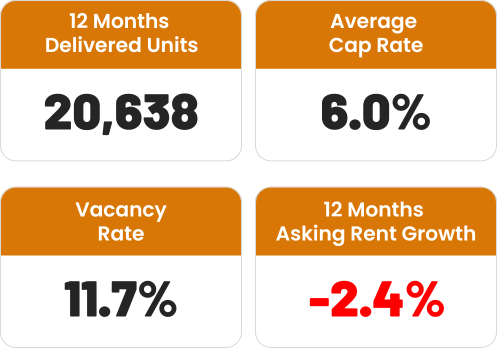
The Phoenix apartment market had a strong start to 2026, with demand reaching record highs. Over the past 12 months, approximately 21,000 apartment units were absorbed, matching the 21,000 new units delivered and creating the first balance between supply and demand since 2021. This helped improve the overall vacancy rate to 11.7%, supported by Phoenix's continued population growth, relative affordability, and strong employment opportunities.


Despite these positive trends, the market is still feeling the impact of several years of heavy construction activity. About 17,000 units remain under construction, and areas such as Downtown Phoenix, Tempe, and the Southwest Valley continue to face oversupply risks. Elevated vacancy levels have kept rent growth negative, with average asking rents declining by 2.4% over the past year. Property owners are also offering larger concessions, including more frequent promotions of 10 or more weeks of free rent, to attract tenants.


Looking ahead, the construction pipeline is expected to continue shrinking, which should ease supply pressures and gradually lower vacancy rates. Although rent growth is likely to remain slightly negative for much of 2026, market conditions are expected to stabilize, and a repeat of the sharper rent declines experienced in 2025 appears unlikely.

Phoenix MULTIfamily Market FAQ


1. How is the Phoenix multifamily market performing in 2026?

The market began 2026 on a strong footing, with record-high demand in the first quarter. Phoenix absorbed approximately 21,000 apartment units over the past 12 months, placing it among the top five U.S. markets for renter demand.


2. What is driving demand for apartments in Phoenix?

Phoenix continues to attract new residents because of its relative affordability, job opportunities, and population growth. These factors have helped maintain strong underlying demand for rental housing.


3. Is apartment supply keeping pace with demand?

Yes. Builders delivered 21,000 new units over the past year, matching the number of units absorbed. This is the first time supply and demand have been balanced since 2021.


4. What is the current vacancy rate?

The overall vacancy rate has improved to 11.7%, reflecting stronger leasing activity. However, vacancy remains elevated compared to historical norms due to the large number of units delivered in recent years.


5. Are there still concerns about oversupply?

Yes. Although the construction pipeline has fallen by about 50% from its peak, there are still 17,000 units under construction, representing 4% of existing inventory. Areas such as Downtown Phoenix, Tempe, and the Southwest Valley are most exposed to oversupply risks.


6. How are rents performing?

Average asking rents declined 2.4% over the past 12 months. While leasing activity improved in early 2026, rent performance was weighed down by losses experienced during the second half of 2025.


7. What incentives are property owners offering?

Owners remain aggressive in attracting tenants by increasing concessions. Newly built communities are frequently offering discounts, including 10 or more weeks of free rent.


8. What is the outlook for the Phoenix multifamily market?

The outlook is cautiously optimistic. As the construction pipeline continues to shrink, annual deliveries are expected to return closer to pre-pandemic levels by 2027. Vacancy should gradually decline, and while rent growth may remain slightly negative during much of 2026, a repeat of the sharper declines seen in 2025 is unlikely.


Posted in CoStar Report
May 29, 2026

Phoenix MULTIFAMILY Market Report May 2026


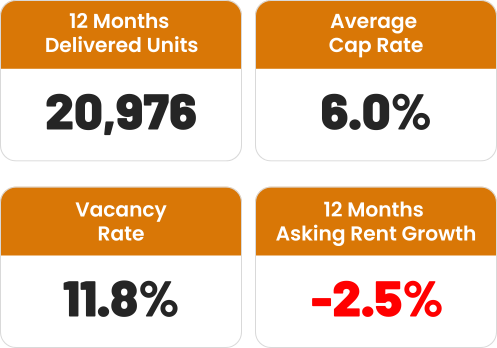
The Phoenix apartment market continues to experience challenges due to an oversupply of new units, despite strong renter demand. In 2025, approximately 16,000 units were absorbed, but developers delivered 21,000 new apartments, causing the overall vacancy rate to rise to 12.5%. With an additional 18,000 units still under construction, vacancy levels are expected to remain elevated throughout 2026.


The excess supply has intensified competition among landlords, leading to a 3.0% decline in average asking rents in 2025 and an increase in leasing concessions. While construction activity is slowing, the market still needs time to absorb the large inventory of vacant units. As a result, rent growth is expected to remain negative in 2026 before conditions gradually improve.

Phoenix MULTIfamily Market FAQ


1. Why is the Phoenix apartment market struggling despite strong demand?

The market is experiencing a mismatch between supply and demand. While renter demand remains strong, a record wave of new apartment construction has added more units than the market can currently absorb, resulting in elevated vacancies and declining rents.


2. How strong is apartment demand in Phoenix?

Demand remains healthy, with 20,000 units absorbed during the 12 months ending in Q1 2026. This is significantly higher than the pre-COVID annual average of 7,200 units and places Phoenix among the top five apartment markets in the nation for demand growth.


3. What is causing vacancy rates to remain high?

Developers completed 21,000 new apartment units over the same period, slightly exceeding demand. This influx of new inventory has pushed the vacancy rate to 11.8%, and vacancies are expected to remain elevated throughout the year.


4. How much new supply is still being added?

Approximately 17,000 apartment units remain under construction, representing 4.0% of the existing inventory. Phoenix continues to rank among the most aggressively developed apartment markets in the country.


5. Which areas are most affected by new construction?

The largest concentration of new supply and potential vacancy challenges is expected in high-growth areas such as Downtown Phoenix, Tempe, and the Southwest Valley.


6. How have rents been affected?

Average asking rents declined by 2.5% over the past 12 months, a larger decrease than the 1.0%–1.5% annual declines recorded in 2023 and 2024.


7. Are there any signs of improvement?

Yes. Apartment rents increased by 0.4% during the first quarter of 2026, marking the strongest quarter-over-quarter gain in two years.


8. Are landlords offering concessions?

Yes. Many property owners are offering larger and more frequent concessions, including rent discounts and more than 10 weeks of free rent at some newly built communities, to attract tenants.


9. When is the market expected to recover?

A slowdown in new construction starts is expected to reduce supply pressure by late 2026 or 2027, which could support the beginning of a market recovery.


10. What is the outlook for 2026?

Although conditions may gradually improve, the market still has a substantial amount of excess inventory to absorb. As a result, another year of negative rent growth is expected in 2026 before a broader recovery takes hold.


Posted in CoStar Report
May 29, 2026

Phoenix MULTIFAMILY Market Report March 2026


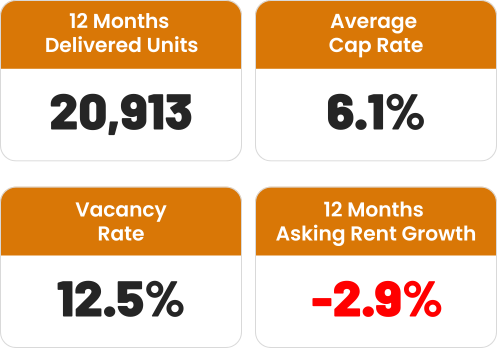
The Phoenix apartment market continues to experience challenges due to an oversupply of new units, despite strong renter demand. In 2025, approximately 16,000 units were absorbed, but developers delivered 21,000 new apartments, causing the overall vacancy rate to rise to 12.5%. With an additional 18,000 units still under construction, vacancy levels are expected to remain elevated throughout 2026.


The excess supply has intensified competition among landlords, leading to a 3.0% decline in average asking rents in 2025 and an increase in leasing concessions. While construction activity is slowing, the market still needs time to absorb the large inventory of vacant units. As a result, rent growth is expected to remain negative in 2026 before conditions gradually improve.

Phoenix MULTIfamily Market FAQ


1. What is currently happening in the Phoenix apartment market?

The Phoenix apartment market is experiencing an oversupply of new apartment units. While renter demand remains strong, new construction has outpaced demand, leading to higher vacancy rates and declining rents.


2. Is demand for apartments in Phoenix still strong?

Yes. The market recorded approximately 16,000 units of net absorption in 2025, which is significantly higher than the pre-pandemic annual average of 7,200 units.


3. Why are vacancy rates increasing?

Developers completed about 21,000 new apartment units in 2025, and another 18,000 units remain under construction. The rapid increase in supply has pushed the vacancy rate to 12.5%.


4. Which areas are most affected by the new supply?

Downtown Phoenix, Tempe, and the Southwest Valley are expected to experience the highest concentration of vacant units due to ongoing development activity.


5. How has the oversupply affected rental rates?

Average asking rents declined by 3.0% in 2025, marking a larger decrease than in the previous two years. Property owners are also offering more concessions and incentives to attract tenants.


6. Are all property types affected?

Yes. Rent declines are occurring across all property classes, including workforce housing and lower-tier communities, which had previously been more resilient.


7. When is the market expected to recover?

Construction activity is beginning to slow, which should help reduce supply pressure by late 2026 or 2027. However, the market still needs to absorb a significant amount of excess inventory before a full recovery can occur.


8. What is the outlook for 2026?

Vacancy rates are expected to remain elevated, and rent growth may remain negative throughout 2026 before conditions gradually improve.


Posted in CoStar Report
Feb. 11, 2026

Phoenix MULTIFAMILY Market Report February 2026


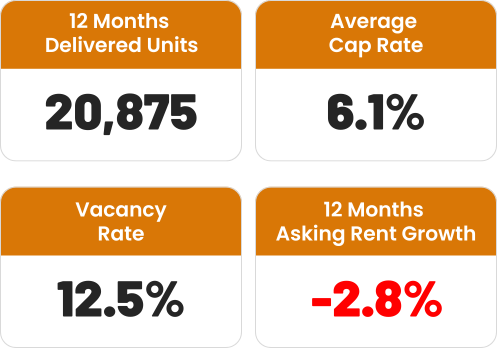
Phoenix continues to face high vacancies and declining rents due to a major surge in new apartment construction, despite strong demand. Over the past year, 17,000 units were absorbed, but 21,000 new units were delivered in 2025, pushing vacancy to 12.5%.


Rents declined 3.0% in 2025, with losses now affecting all property classes. Another 19,000 units are under construction, keeping pressure on the market. While construction is expected to slow by late 2026 or 2027, rent growth is likely to remain negative through 2026.

Phoenix MULTIfamily Market FAQ


1. Why is Phoenix experiencing rent declines despite strong demand?

Although demand remains healthy, the volume of new apartment supply has far exceeded absorption. This oversupply has increased competition among landlords, leading to higher vacancy rates and downward pressure on rents.


2. What is the current vacancy rate, and why is it so high?

Vacancy reached 12.5% in early 2026, driven primarily by the delivery of a large number of newly constructed units, many of which are still in lease-up phases.


3. How much new apartment supply is expected?

There are approximately 19,000 units under construction, equal to 4.4% of total inventory, which will continue to pressure vacancies in the near term.


4. Which areas are most impacted by oversupply?

High-growth areas such as Downtown Phoenix, Tempe, and the Southwest Valley are seeing the highest concentration of new development and are most vulnerable to elevated vacancies.


5. Are rent declines affecting all property types?

Yes. Rent softness now spans all asset classes, including workforce housing, which had previously been more insulated from new supply. This reflects the broad impact of excess inventory across the market.


6. When is the market expected to recover?

Construction activity is expected to slow by late 2026 or 2027, which should gradually reduce supply pressure. However, rent growth is likely to remain negative through 2026 as the market works through existing excess inventory.


Posted in CoStar Report
Jan. 20, 2026

Phoenix MULTIFAMILY Market Report January 2026


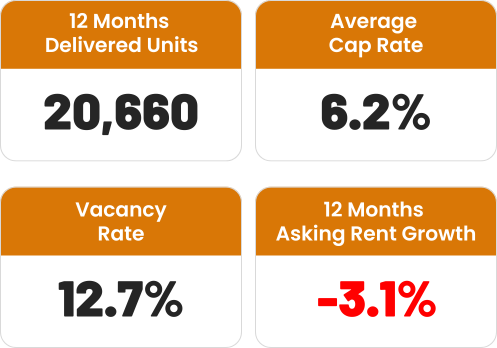
The Phoenix apartment market continues to struggle with an imbalance between strong demand and excessive new supply. Over the past year, the market absorbed 17,000 units, ranking Phoenix among the top 10 U.S. markets for demand growth. However, developers delivered 21,000 new units in 2025, pushing vacancy to 12.5% in early 2026.


With another 19,000 units under construction, competition remains intense, especially in Downtown Phoenix, Tempe, and the Southwest Valley. This oversupply has driven average rents down 3.0% in 2025, with rent declines now affecting all property classes, including workforce housing.


Although construction is expected to slow by late 2026 or 2027, the market must first absorb excess inventory, making another year of negative rent growth likely in 2026.

Phoenix MULTIfamily Market FAQ


1. Why are rents declining in Phoenix despite strong demand?

Because new apartment supply is being delivered faster than demand can absorb it, creating excess inventory and increasing competition among property owners.


2. What is the current vacancy rate?

Overall vacancy stands at 12.5% as of early 2026, driven by high levels of new construction.


3. How much new supply is coming to the market?

There are approximately 19,000 units under construction, equal to 4.4% of total inventory.


4. Which areas are most impacted by oversupply?

Downtown Phoenix, Tempe, and the Southwest Valley are experiencing the highest concentration of new apartment development.


5. Are all property types affected?

Yes. Both high-end and workforce housing communities are seeing rent declines, with 1–2 Star properties down 2.5% and 4–5 Star properties down 2.9%.


6. When is recovery expected?

Construction is expected to slow by late 2026 or 2027, which may allow recovery to begin. However, rent growth is likely to remain negative throughout 2026.


Posted in CoStar Report
Dec. 9, 2025

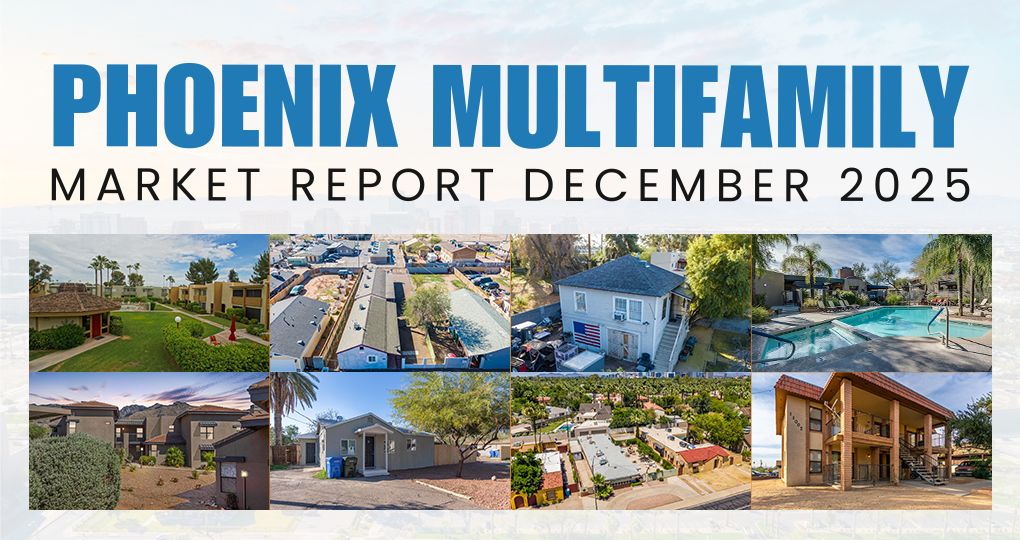
Phoenix MULTIFAMILY Market Report December 2025


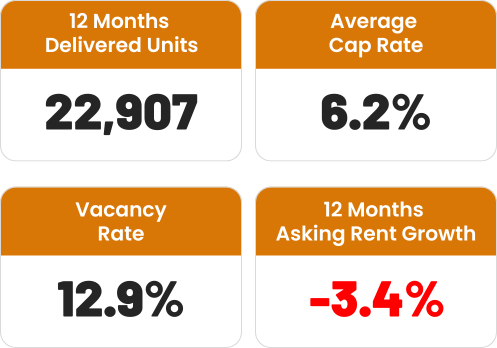
The Phoenix apartment market continues to face a significant supply–demand imbalance. Despite strong renter demand — with 15,000 units absorbed in the past year, more than double the pre-COVID average — an unprecedented surge in new construction is keeping vacancies high and pushing rents downward. Developers delivered 23,000 new units over the last 12 months, causing overall vacancy to climb to 12.9%, with levels expected to remain elevated through 2026. Another 21,000 units are still under construction, placing Phoenix among the most aggressively built markets in the nation.


Oversupply has intensified competition, leading to negative rent growth and widespread concessions. Average rents have dropped 3.4% in the past year, and over 60% of properties are offering discounts, with lease-up communities providing 6–12 weeks of free rent. Rent losses are now affecting all asset classes, including lower-tier workforce housing, which had previously been more insulated.


While construction starts are slowing — suggesting supply relief by late 2026 — the existing inventory glut will take time to absorb. As a result, the market may experience another year of negative rent growth before a recovery begins.

Phoenix MULTIfamily Market FAQ


1. What’s the main issue in the Phoenix apartment market right now?

A persistent mismatch between strong renter demand and an overwhelming supply of new construction is keeping vacancies high and pushing rents downward.


2. How strong is demand?

Demand remains resilient. Phoenix absorbed 15,000 units in the past year—more than double the pre-COVID average and ranking it among the top 10 U.S. markets for demand growth.


3. Why are vacancies increasing?

Builders delivered 23,000 new units—over three times the typical annual volume before 2020—driving overall vacancy up to 12.9%, a level expected to remain elevated through 2026.


4. How much more supply is coming?

Another 21,000 units (about 5% of total inventory) are still under construction, making Phoenix one of the most aggressively built markets in the nation. High-growth areas like Downtown Phoenix, Tempe, and the Southwest Valley are seeing the most accumulation of empty units.


5. What’s happening with rents?

Annual rent growth has been negative since early 2023. Average asking rents fell 3.4% in the last year, with 60%+ of communities offering concessions—often 6–12 weeks of free rent in lease-up properties.


6. Are lower-tier (workforce) properties affected?

Yes. Rent losses have spread across the entire market.

  • 1–2 Star assets: –1.8% annual rent growth
  • 4–5 Star assets: –3.4%

Workforce housing, which had previously been insulated, is now experiencing sustained rent declines.


7. When will conditions improve?

A slowdown in new construction starts suggests supply pressure may ease by late 2026, allowing early signs of recovery. However, the large inventory glut means 2026 will likely see another year of negative rent growth before stabilization begins.


Posted in CoStar Report
Nov. 5, 2025

Phoenix MULTIFAMILY Market Report November 2025


The Phoenix apartment market continues to face challenges due to a persistent imbalance between supply and demand. Although renter demand remains strong— with 16,000 units absorbed over the past year, more than double the pre-COVID average— an unprecedented surge in construction is keeping vacancy rates high at 12.4% and rent growth negative.

Over the last 12 months, 22,000 new units were completed, with another 23,000 under construction, making Phoenix the sixth most actively built apartment market in the U.S. This oversupply is driving intense competition, prompting widespread rent concessions— with average asking rents down 3.3% and more than 60% of communities offering discounts (often six to eight weeks of free rent).

Rent declines, which initially affected only higher-end properties, have now spread to workforce housing, indicating broader market weakness. While fewer construction starts suggest supply pressures may ease by late 2026, the current oversupply means elevated vacancies and negative rent growth are likely to persist in the near term before recovery begins.

Phoenix MULTIfamily Market FAQ


1. Why are vacancies so high in Phoenix?

A record wave of new construction—over 22,000 units in the past year—is outpacing even strong tenant demand, keeping vacancies elevated.


2. How is rent growth performing?

Rents have declined 3.3% year-over-year, and many communities are offering 6–8 weeks of free rent to attract tenants.


3. Which areas are most affected?

Vacancy pressures are most evident in Downtown Phoenix, Tempe, and the Southwest Valley, where new supply is concentrated.


4. Are all property types seeing rent declines?

Yes. While luxury (4 & 5 Star) assets were hit first, 1 & 2 Star communities are now also experiencing negative rent growth.


5. When is recovery expected?

A slowdown in construction starts indicates that supply pressure may ease by late 2026, allowing for gradual market stabilization and potential rent recovery.


Posted in CoStar Report
Oct. 7, 2025

Phoenix MULTIFAMILY Market Report October 2025


The Phoenix apartment market continues to face an imbalance between supply and demand. Despite solid leasing activity—17,000 units absorbed in the past year, more than double the pre-COVID average—record construction levels are keeping vacancy rates high (12.1%) and rent growth negative.

Over the past 12 months, 23,000 new units were delivered, triple the typical annual volume from 2015–2019, with another 21,000 units under construction. This surge places Phoenix among the top six most actively built apartment markets in the U.S., particularly in Downtown Phoenix, Tempe, and the Southwest Valley, where empty units are accumulating.

The excess supply has intensified competition, leading to a 3% drop in asking rents and widespread rental concessions, often offering six to eight weeks of free rent. Rent declines now affect both luxury (4 & 5 Star) and workforce (1 & 2 Star) properties alike.

Looking ahead, construction starts are slowing, which could ease supply pressures by 2026. However, with a large backlog of new inventory, vacancies and rent softness are expected to persist through 2025, with a gradual recovery anticipated in 2026.

Phoenix MULTIfamily Market FAQ


1. What is currently affecting the Phoenix apartment market?

A major imbalance between supply and demand is impacting the market. A record level of new apartment construction is outpacing tenant demand, leading to higher vacancy rates and negative rent growth.


2. How strong is apartment demand in Phoenix?

Demand remains solid, with 17,000 units absorbed in the past 12 months — more than double the pre-COVID annual average of 7,200 units. This makes Phoenix one of the top 10 U.S. markets for apartment demand.


3. Why are vacancies still high despite strong demand?

Developers completed 23,000 new units over the past year — more than triple the pre-2019 average. With 21,000 more units still under construction, vacancies have risen to 12.1% and are expected to stay elevated as more supply hits the market.


4. Which areas are most affected by oversupply?

High-growth areas such as Downtown Phoenix, Tempe, and the Southwest Valley are seeing the highest number of empty units due to heavy construction activity.


5. How is rent growth performing?

Rents have declined by 3% over the past year, and over 50% of apartment communities now offer discounts or free rent incentives — often six to eight weeks free for new leases.


6. Are all property types affected by rent declines?

Yes. Both luxury (4–5 Star) and workforce (1–2 Star) apartments are seeing rent losses. Rent fell 3.1% for high-end complexes and 1.8% for lower-tier communities.


7. What’s the outlook for the next few years?

Construction starts are slowing, which should help balance supply and demand by 2026. However, due to excess inventory, negative rent growth is expected to continue through 2025, with a gradual recovery beginning afterward.


Posted in CoStar Report