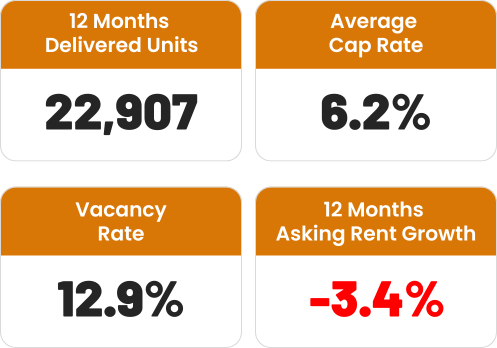
The Phoenix apartment market continues to face a significant supply–demand imbalance. Despite strong renter demand — with 15,000 units absorbed in the past year, more than double the pre-COVID average — an unprecedented surge in new construction is keeping vacancies high and pushing rents downward. Developers delivered 23,000 new units over the last 12 months, causing overall vacancy to climb to 12.9%, with levels expected to remain elevated through 2026. Another 21,000 units are still under construction, placing Phoenix among the most aggressively built markets in the nation.
Oversupply has intensified competition, leading to negative rent growth and widespread concessions. Average rents have dropped 3.4% in the past year, and over 60% of properties are offering discounts, with lease-up communities providing 6–12 weeks of free rent. Rent losses are now affecting all asset classes, including lower-tier workforce housing, which had previously been more insulated.
While construction starts are slowing — suggesting supply relief by late 2026 — the existing inventory glut will take time to absorb. As a result, the market may experience another year of negative rent growth before a recovery begins.
Phoenix MULTIfamily Market FAQ
1. What’s the main issue in the Phoenix apartment market right now?
A persistent mismatch between strong renter demand and an overwhelming supply of new construction is keeping vacancies high and pushing rents downward.
2. How strong is demand?
Demand remains resilient. Phoenix absorbed 15,000 units in the past year—more than double the pre-COVID average and ranking it among the top 10 U.S. markets for demand growth.
3. Why are vacancies increasing?
Builders delivered 23,000 new units—over three times the typical annual volume before 2020—driving overall vacancy up to 12.9%, a level expected to remain elevated through 2026.
4. How much more supply is coming?
Another 21,000 units (about 5% of total inventory) are still under construction, making Phoenix one of the most aggressively built markets in the nation. High-growth areas like Downtown Phoenix, Tempe, and the Southwest Valley are seeing the most accumulation of empty units.
5. What’s happening with rents?
Annual rent growth has been negative since early 2023. Average asking rents fell 3.4% in the last year, with 60%+ of communities offering concessions—often 6–12 weeks of free rent in lease-up properties.
6. Are lower-tier (workforce) properties affected?
Yes. Rent losses have spread across the entire market.
- 1–2 Star assets: –1.8% annual rent growth
- 4–5 Star assets: –3.4%
Workforce housing, which had previously been insulated, is now experiencing sustained rent declines.
7. When will conditions improve?
A slowdown in new construction starts suggests supply pressure may ease by late 2026, allowing early signs of recovery. However, the large inventory glut means 2026 will likely see another year of negative rent growth before stabilization begins.
:format(webp):quality(80)/u.realgeeks.media/capcorerealestate/badge_trans.png)
:format(webp):quality(80)/u.realgeeks.media/capcorerealestate/Facebook.jpg)