The Phoenix multifamily market showed signs of recovery in 2024, driven by easing inflation and rising consumer confidence, which boosted renter demand. While new supply still outpaces leasing, occupancy decline has slowed, signaling a potential recovery in property performance. Over the past year, 18,000 units were absorbed, exceeding the pre-COVID five-year average. Notably, mid-priced properties saw a turnaround, with 4,600 units absorbed, compared to negative absorption in the previous years.
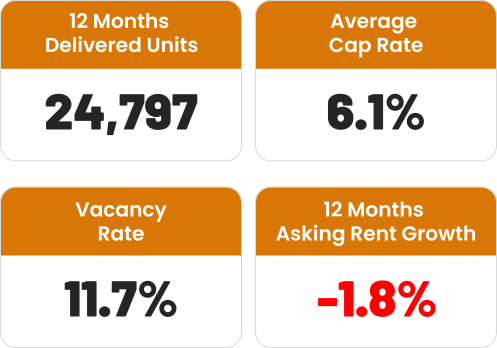
Despite improved demand, high construction levels remain a challenge, with 25,000 new units completed in the past year and another 27,000 under construction. This has caused vacancies to rise, especially in high-growth areas like Downtown Phoenix and Tempe. However, workforce housing has been less impacted. Vacancy at luxury properties has increased significantly, and rents have declined by 2%.
Rent growth has been negative since 2023, with more than half of communities offering discounts. Vacancy is expected to peak in 2025, with a potential recovery by the end of the year. Rent growth may remain sluggish until 2026 as the market absorbs recent construction.
Phoenix MULTIfamily Market FAQ
1. How is the Phoenix multifamily market performing in 2024?
The Phoenix multifamily market is showing signs of recovery in 24Q3. Easing inflation and rising consumer confidence have boosted renter demand, resulting in 20,000 units of net absorption over the past 12 months. However, vacancy rates remain elevated at 11.5%, largely due to a surge in new construction.
2. How does the current net absorption compare to pre-COVID levels?
Net absorption over the past year has outpaced pre-COVID five-year annual averages of 7,200 units, marking a significant improvement in tenant demand.
3. What property segments are performing best?
Midpriced 3 Star properties have shown a strong recovery, absorbing 5,000 units in the past year. Workforce housing has also remained relatively stable, with slight positive rent growth of 0.09%.
4. How is the luxury segment performing?
- Workforce Housing (1 & 2 Star properties): These segments have seen a modest increase in vacancy rates, with a slight negative rent growth of -0.14%.
- Luxury Properties: Vacancy has risen by over 650 basis points, and rents have declined by 2.0% year over year.
5. Are rents increasing or decreasing?
Annual rent growth has been negative since early 2023. Over the past 12 months, the average asking rent dropped by 1.8%. In response to elevated vacancies and competition, more than 50% of communities are offering rent concessions, such as six to eight weeks of free rent for properties in lease-up and four weeks for stabilized assets.
6. What does the future outlook look like for the market?
Vacancy is expected to peak in 2025, with a potential recovery beginning by the end of the year. However, a meaningful uptick in rent growth may take longer due to the oversupply of units from recent years. Rent growth is projected to remain slow in 2025 but could accelerate by 2026 as vacancy levels begin to stabilize.

