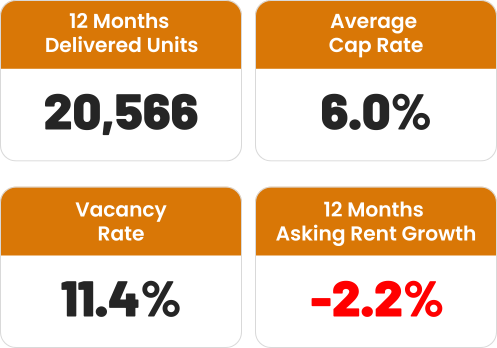
The Phoenix apartment market started 2026 on a strong note, with record-high renter demand helping balance new apartment deliveries for the first time since 2021. Over the past 12 months, net absorption reached 22,000 units, significantly exceeding historical averages and positioning Phoenix among the nation's top apartment markets for demand. Vacancy improved to 11.4% as supply and demand came into balance, although elevated inventory from recent years continues to weigh on overall market performance, particularly in Downtown Phoenix, Tempe, and the Southwest Valley.
Despite improving fundamentals, average asking rents declined 2.2% year over year as property owners continued offering aggressive concessions to attract renters. However, the construction pipeline has been cut in half from its peak, which is expected to reduce supply pressure over the next two years. As new deliveries slow, vacancy is projected to gradually decline and rent performance is expected to stabilize, making another sharp rent decline like 2025 unlikely.
Phoenix MULTIfamily Market FAQ
1. What is the current state of the Phoenix multifamily market?
The Phoenix multifamily market is showing signs of recovery after several years of elevated apartment deliveries. Strong renter demand has helped absorb much of the new supply, leading to improving occupancy and a more balanced market, although vacancy remains above historical norms.
2. Why is renter demand so strong?
Phoenix continues to attract new residents due to its relative affordability, job opportunities, and population growth. Over the past year, renter demand significantly exceeded historical averages, placing Phoenix among the top U.S. markets for apartment demand.
3. Is oversupply still a concern?
Yes. While the construction pipeline has slowed considerably, certain submarkets—including Downtown Phoenix, Tempe, and the Southwest Valley—still face higher risks of oversupply due to the large number of recently completed and under-construction units.
4. What is happening with rents?
Average asking rents have declined over the past year as landlords compete for tenants through concessions such as several weeks of free rent. However, the pace of rent declines is expected to moderate as fewer new units enter the market.
5. What is the outlook for investors?
The market is expected to gradually improve as construction activity continues to slow and excess inventory is absorbed. Vacancy should continue to decline over the next few years, creating a healthier supply-demand balance and supporting long-term rent growth once the current oversupply is worked through.


