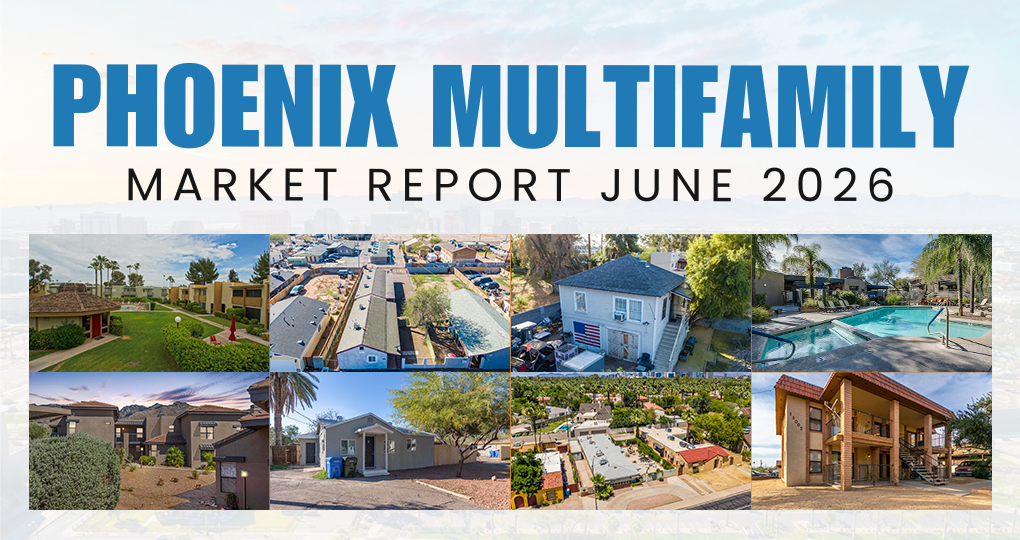
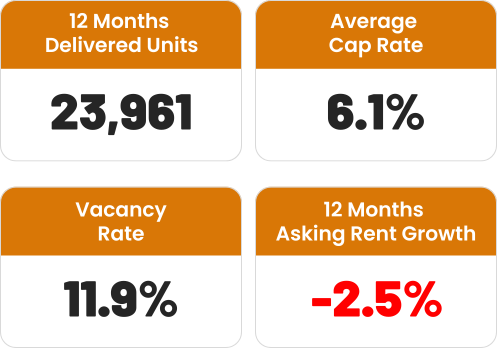
The Phoenix apartment market continues to face a supply-demand imbalance, with a surge in new construction keeping vacancy rates high and rent growth negative. Despite strong leasing activity—18,000 units absorbed over the past year, ranking Phoenix among the top 10 U.S. markets—new supply remains overwhelming, with 24,000 units completed and another 22,000 under construction.
Vacancy has risen to 11.9% and may climb further, especially in high-growth areas like Downtown Phoenix, Tempe, and the Southwest Valley. Luxury properties are seeing the highest pressure, with vacancy rates up over 700 basis points and rents declining 2.6% year-over-year. Workforce housing is less affected, though still experiencing some softening.
The competitive landscape has driven widespread rent concessions, with over half of communities offering discounts, often up to 6–8 weeks of free rent. While new construction is expected to slow, a full recovery may not occur until 2026, with continued negative rent growth likely in the near term due to persistent oversupply.
Phoenix MULTIfamily Market FAQ
1. Why is the Phoenix apartment market under pressure right now?
The market is facing a significant mismatch between supply and demand. A record-high level of new apartment construction is outpacing strong leasing activity, leading to higher vacancy rates and negative rent growth.
2. How strong is apartment demand in Phoenix?
Phoenix saw 18,000 units of net absorption in the past 12 months—more than double the pre-COVID average of 7,200 units per year. This ranks Phoenix among the top 10 apartment demand markets in the U.S.
3. How much new supply is being added?
Over the past year, 24,000 new units were completed—more than three times the annual average from 2015 to 2019. An additional 22,000 units are currently under construction, accounting for 5.4% of the existing inventory, making Phoenix the 6th most active construction market in the country.
4. What’s the current vacancy rate?
Overall vacancy has risen to 11.9%, including newly built properties still in lease-up. This figure is expected to increase as more units are delivered throughout the year.
5. Which areas are most affected by oversupply?
High-growth areas such as Downtown Phoenix, Tempe, and the Southwest Valley are seeing the most accumulation of vacant units due to concentrated development activity.
6. How are different property classes being impacted?
- Luxury (Class A) properties have been hit hardest, with vacancy up over 700 basis points and rents falling by 2.6% year-over-year.
- Workforce housing (Class B & C) is more insulated, with vacancy rising 420 basis points and a modest 1.0% rent decline.
7. What about rent growth and concessions?
Rent growth has been negative since early 2023. Over the past year:
- Average asking rents declined by 2.5%.
- More than 50% of communities are offering concessions.
- Renters can expect 6–8 weeks of free rent at many lease-up properties.
8. When is the market expected to recover?
Construction starts have recently slowed, suggesting that supply pressure may ease by 2026. However, with a significant inventory glut remaining, another year of negative rent growth is likely before the market stabilizes.

:format(webp):quality(80)/u.realgeeks.media/capcorerealestate/badge_trans.png)
:format(webp):quality(80)/u.realgeeks.media/capcorerealestate/Facebook.jpg)