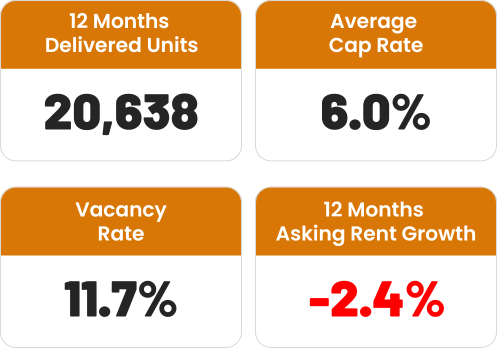
The Phoenix apartment market had a strong start to 2026, with demand reaching record highs. Over the past 12 months, approximately 21,000 apartment units were absorbed, matching the 21,000 new units delivered and creating the first balance between supply and demand since 2021. This helped improve the overall vacancy rate to 11.7%, supported by Phoenix's continued population growth, relative affordability, and strong employment opportunities.
Despite these positive trends, the market is still feeling the impact of several years of heavy construction activity. About 17,000 units remain under construction, and areas such as Downtown Phoenix, Tempe, and the Southwest Valley continue to face oversupply risks. Elevated vacancy levels have kept rent growth negative, with average asking rents declining by 2.4% over the past year. Property owners are also offering larger concessions, including more frequent promotions of 10 or more weeks of free rent, to attract tenants.
Looking ahead, the construction pipeline is expected to continue shrinking, which should ease supply pressures and gradually lower vacancy rates. Although rent growth is likely to remain slightly negative for much of 2026, market conditions are expected to stabilize, and a repeat of the sharper rent declines experienced in 2025 appears unlikely.
Phoenix MULTIfamily Market FAQ
1. How is the Phoenix multifamily market performing in 2026?
The market began 2026 on a strong footing, with record-high demand in the first quarter. Phoenix absorbed approximately 21,000 apartment units over the past 12 months, placing it among the top five U.S. markets for renter demand.
2. What is driving demand for apartments in Phoenix?
Phoenix continues to attract new residents because of its relative affordability, job opportunities, and population growth. These factors have helped maintain strong underlying demand for rental housing.
3. Is apartment supply keeping pace with demand?
Yes. Builders delivered 21,000 new units over the past year, matching the number of units absorbed. This is the first time supply and demand have been balanced since 2021.
4. What is the current vacancy rate?
The overall vacancy rate has improved to 11.7%, reflecting stronger leasing activity. However, vacancy remains elevated compared to historical norms due to the large number of units delivered in recent years.
5. Are there still concerns about oversupply?
Yes. Although the construction pipeline has fallen by about 50% from its peak, there are still 17,000 units under construction, representing 4% of existing inventory. Areas such as Downtown Phoenix, Tempe, and the Southwest Valley are most exposed to oversupply risks.
6. How are rents performing?
Average asking rents declined 2.4% over the past 12 months. While leasing activity improved in early 2026, rent performance was weighed down by losses experienced during the second half of 2025.
7. What incentives are property owners offering?
Owners remain aggressive in attracting tenants by increasing concessions. Newly built communities are frequently offering discounts, including 10 or more weeks of free rent.
8. What is the outlook for the Phoenix multifamily market?
The outlook is cautiously optimistic. As the construction pipeline continues to shrink, annual deliveries are expected to return closer to pre-pandemic levels by 2027. Vacancy should gradually decline, and while rent growth may remain slightly negative during much of 2026, a repeat of the sharper declines seen in 2025 is unlikely.

:format(webp):quality(80)/u.realgeeks.media/capcorerealestate/badge_trans.png)
:format(webp):quality(80)/u.realgeeks.media/capcorerealestate/Facebook.jpg)