
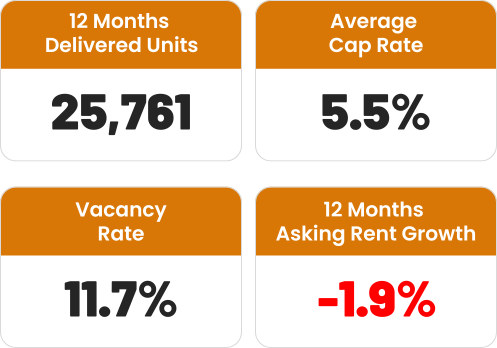
In 2024, Phoenix's multifamily market showed signs of recovery, driven by stronger renter demand due to easing inflation and improved consumer confidence. Net absorption reached 19,000 units, well above the pre-COVID average, though vacancy has risen to 11.7%. The surge in construction, with 26,000 new units completed and 25,000 more under construction, remains a challenge. High-growth areas like Downtown Phoenix, Tempe, and the South West Valley are seeing the most new development.
Luxury properties have faced the greatest pressure, with higher vacancy rates and rent declines, while workforce housing has been more insulated. Despite improved demand, competition is intense, with negative rent growth and increasing concessions across the market. Vacancy is expected to peak in 2025, and while a recovery may begin later this year, significant rent growth is not expected until 2026 as the market absorbs recent deliveries.
Phoenix MULTIfamily Market FAQ
1. What is the current state of the Phoenix multifamily market in 2024?
The Phoenix multifamily market is showing signs of recovery, driven by easing inflation, rising consumer confidence, and a strong rebound in tenant demand. Although new supply continues to exceed leasing activity, the rate of occupancy decline has slowed, suggesting potential improvement in property performance.
2. What is the net absorption in Phoenix over the past year?
Phoenix recorded 19,000 units of net absorption in the past 12 months, surpassing the pre-COVID five-year average of 7,200 units annually. This reflects strong demand, particularly in newly delivered luxury complexes and midpriced 3 Star properties.
3. How is the construction boom impacting the market?
While demand has improved, the surge in construction is a significant challenge. Builders completed 26,000 new units in the last year, and another 25,000 units are under construction. This aggressive building rate has led to higher vacancy rates in high-growth areas like Downtown Phoenix, Tempe, and the South West Valley.
4. Which sectors are most affected by the construction surge?
High-end properties have been the most affected by the increase in supply, with vacancy rates for luxury properties rising by over 700 basis points and rents declining by 2.1% year over year. Workforce housing has been less impacted, with vacancy and rent growth remaining relatively stable.
5. What impact has the construction surge had on rents?
Rents have experienced negative growth, with the average asking rent falling by 1.9% over the past 12 months. Over 50% of communities are offering some form of discount, and renters can expect up to eight weeks of free rent at properties in lease-up.
6. What is the outlook for vacancy and rent growth in the coming years?
Vacancy is expected to peak in 2025, with potential for a recovery by the end of the year. However, significant rent growth may take longer to materialize due to the large volume of new units delivered in recent years. A slow uptick in rent growth is anticipated, with a potential acceleration in 2026 as vacancy rates begin to decline.
7. How competitive is the Phoenix multifamily market?
Competition has intensified due to elevated vacancy and a high volume of construction. Rent growth has been negative since early 2023, and concessions are widespread. Renters can expect ongoing discounts and incentives throughout 2024 as the market continues to adjust.
8. Where are the most new units being developed in Phoenix?
New development is primarily focused on high-end properties in areas like Downtown Phoenix, Tempe, and the South West Valley, which has become the top construction submarket. These areas are seeing the highest concentration of new units, contributing to the supply-demand imbalance.

