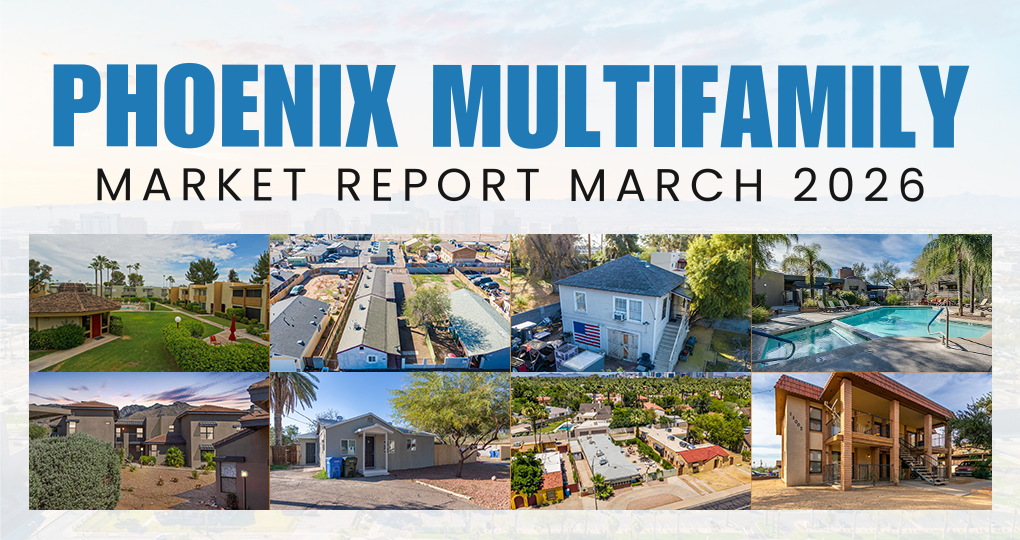
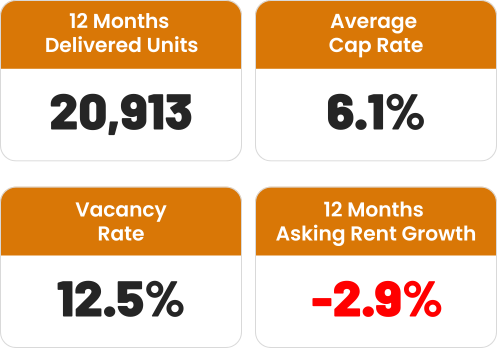
The Phoenix apartment market continues to experience challenges due to an oversupply of new units, despite strong renter demand. In 2025, approximately 16,000 units were absorbed, but developers delivered 21,000 new apartments, causing the overall vacancy rate to rise to 12.5%. With an additional 18,000 units still under construction, vacancy levels are expected to remain elevated throughout 2026.
The excess supply has intensified competition among landlords, leading to a 3.0% decline in average asking rents in 2025 and an increase in leasing concessions. While construction activity is slowing, the market still needs time to absorb the large inventory of vacant units. As a result, rent growth is expected to remain negative in 2026 before conditions gradually improve.
Phoenix MULTIfamily Market FAQ
1. What is currently happening in the Phoenix apartment market?
The Phoenix apartment market is experiencing an oversupply of new apartment units. While renter demand remains strong, new construction has outpaced demand, leading to higher vacancy rates and declining rents.
2. Is demand for apartments in Phoenix still strong?
Yes. The market recorded approximately 16,000 units of net absorption in 2025, which is significantly higher than the pre-pandemic annual average of 7,200 units.
3. Why are vacancy rates increasing?
Developers completed about 21,000 new apartment units in 2025, and another 18,000 units remain under construction. The rapid increase in supply has pushed the vacancy rate to 12.5%.
4. Which areas are most affected by the new supply?
Downtown Phoenix, Tempe, and the Southwest Valley are expected to experience the highest concentration of vacant units due to ongoing development activity.
5. How has the oversupply affected rental rates?
Average asking rents declined by 3.0% in 2025, marking a larger decrease than in the previous two years. Property owners are also offering more concessions and incentives to attract tenants.
6. Are all property types affected?
Yes. Rent declines are occurring across all property classes, including workforce housing and lower-tier communities, which had previously been more resilient.
7. When is the market expected to recover?
Construction activity is beginning to slow, which should help reduce supply pressure by late 2026 or 2027. However, the market still needs to absorb a significant amount of excess inventory before a full recovery can occur.
8. What is the outlook for 2026?
Vacancy rates are expected to remain elevated, and rent growth may remain negative throughout 2026 before conditions gradually improve.

:format(webp):quality(80)/u.realgeeks.media/capcorerealestate/badge_trans.png)
:format(webp):quality(80)/u.realgeeks.media/capcorerealestate/Facebook.jpg)