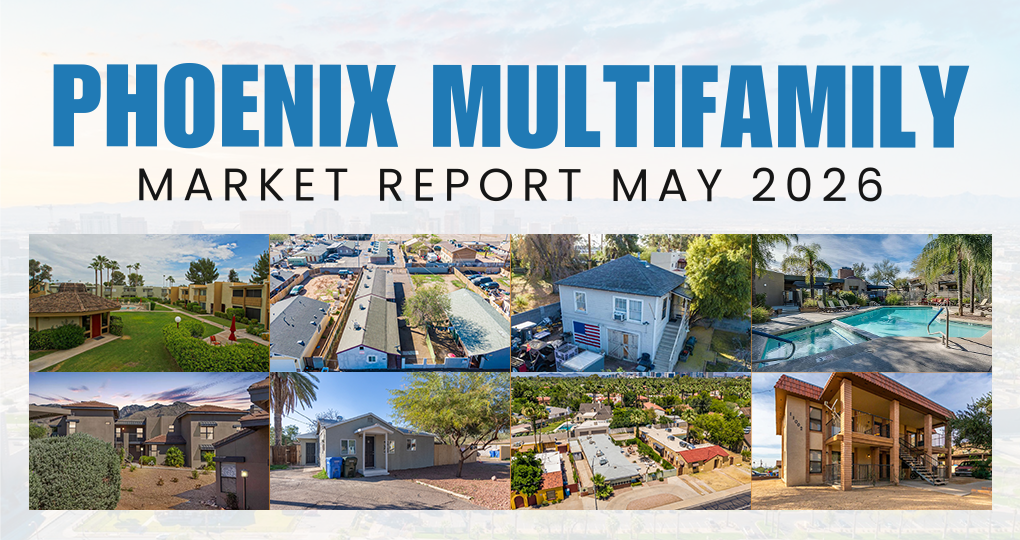
The Phoenix apartment market continues to experience challenges due to an oversupply of new units, despite strong renter demand. In 2025, approximately 16,000 units were absorbed, but developers delivered 21,000 new apartments, causing the overall vacancy rate to rise to 12.5%. With an additional 18,000 units still under construction, vacancy levels are expected to remain elevated throughout 2026.
The excess supply has intensified competition among landlords, leading to a 3.0% decline in average asking rents in 2025 and an increase in leasing concessions. While construction activity is slowing, the market still needs time to absorb the large inventory of vacant units. As a result, rent growth is expected to remain negative in 2026 before conditions gradually improve.
Phoenix MULTIfamily Market FAQ
1. Why is the Phoenix apartment market struggling despite strong demand?
The market is experiencing a mismatch between supply and demand. While renter demand remains strong, a record wave of new apartment construction has added more units than the market can currently absorb, resulting in elevated vacancies and declining rents.
2. How strong is apartment demand in Phoenix?
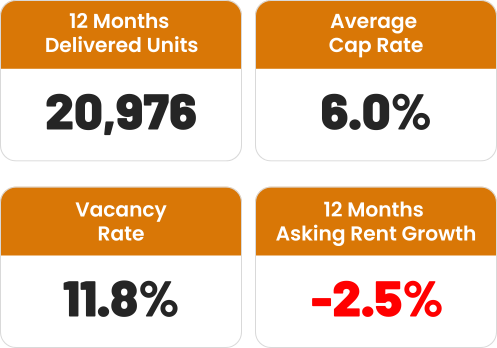
Demand remains healthy, with 20,000 units absorbed during the 12 months ending in Q1 2026. This is significantly higher than the pre-COVID annual average of 7,200 units and places Phoenix among the top five apartment markets in the nation for demand growth.
3. What is causing vacancy rates to remain high?
Developers completed 21,000 new apartment units over the same period, slightly exceeding demand. This influx of new inventory has pushed the vacancy rate to 11.8%, and vacancies are expected to remain elevated throughout the year.
4. How much new supply is still being added?
Approximately 17,000 apartment units remain under construction, representing 4.0% of the existing inventory. Phoenix continues to rank among the most aggressively developed apartment markets in the country.
5. Which areas are most affected by new construction?
The largest concentration of new supply and potential vacancy challenges is expected in high-growth areas such as Downtown Phoenix, Tempe, and the Southwest Valley.
6. How have rents been affected?
Average asking rents declined by 2.5% over the past 12 months, a larger decrease than the 1.0%–1.5% annual declines recorded in 2023 and 2024.
7. Are there any signs of improvement?
Yes. Apartment rents increased by 0.4% during the first quarter of 2026, marking the strongest quarter-over-quarter gain in two years.
8. Are landlords offering concessions?
Yes. Many property owners are offering larger and more frequent concessions, including rent discounts and more than 10 weeks of free rent at some newly built communities, to attract tenants.
9. When is the market expected to recover?
A slowdown in new construction starts is expected to reduce supply pressure by late 2026 or 2027, which could support the beginning of a market recovery.
10. What is the outlook for 2026?
Although conditions may gradually improve, the market still has a substantial amount of excess inventory to absorb. As a result, another year of negative rent growth is expected in 2026 before a broader recovery takes hold.

:format(webp):quality(80)/u.realgeeks.media/capcorerealestate/badge_trans.png)
:format(webp):quality(80)/u.realgeeks.media/capcorerealestate/Facebook.jpg)