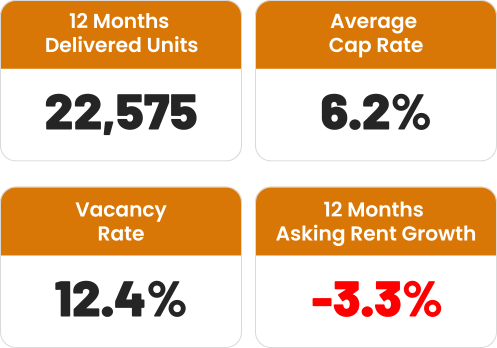
The Phoenix apartment market continues to face challenges due to a persistent imbalance between supply and demand. Although renter demand remains strong— with 16,000 units absorbed over the past year, more than double the pre-COVID average— an unprecedented surge in construction is keeping vacancy rates high at 12.4% and rent growth negative.
Over the last 12 months, 22,000 new units were completed, with another 23,000 under construction, making Phoenix the sixth most actively built apartment market in the U.S. This oversupply is driving intense competition, prompting widespread rent concessions— with average asking rents down 3.3% and more than 60% of communities offering discounts (often six to eight weeks of free rent).
Rent declines, which initially affected only higher-end properties, have now spread to workforce housing, indicating broader market weakness. While fewer construction starts suggest supply pressures may ease by late 2026, the current oversupply means elevated vacancies and negative rent growth are likely to persist in the near term before recovery begins.
Phoenix MULTIfamily Market FAQ
1. Why are vacancies so high in Phoenix?
A record wave of new construction—over 22,000 units in the past year—is outpacing even strong tenant demand, keeping vacancies elevated.
2. How is rent growth performing?
Rents have declined 3.3% year-over-year, and many communities are offering 6–8 weeks of free rent to attract tenants.
3. Which areas are most affected?
Vacancy pressures are most evident in Downtown Phoenix, Tempe, and the Southwest Valley, where new supply is concentrated.
4. Are all property types seeing rent declines?
Yes. While luxury (4 & 5 Star) assets were hit first, 1 & 2 Star communities are now also experiencing negative rent growth.
5. When is recovery expected?
A slowdown in construction starts indicates that supply pressure may ease by late 2026, allowing for gradual market stabilization and potential rent recovery.

:format(webp):quality(80)/u.realgeeks.media/capcorerealestate/badge_trans.png)
:format(webp):quality(80)/u.realgeeks.media/capcorerealestate/Facebook.jpg)