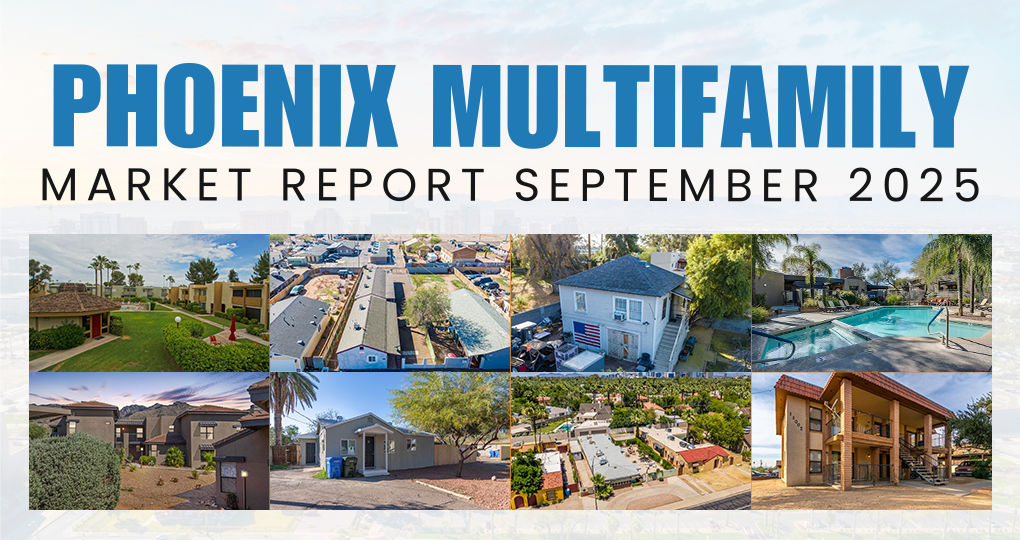
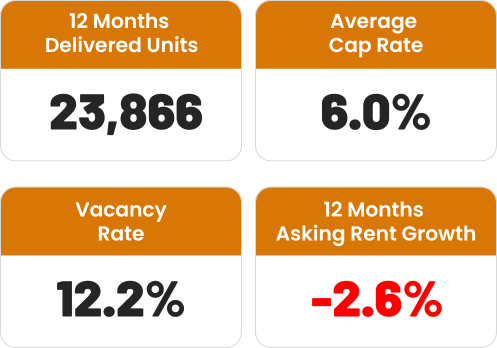
The Phoenix apartment market is experiencing a persistent imbalance between supply and demand, keeping vacancies elevated and rent growth negative. Over the past 12 months, the Valley recorded 17,000 units of net absorption—more than double the pre-COVID average and ranking Phoenix among the top 10 demand markets nationwide. However, this strong demand has been overshadowed by an unprecedented construction boom, with 24,000 new units delivered in the past year and another 23,000 underway. This surge has pushed vacancy rates to 12.2%, particularly in high-growth areas like Downtown Phoenix, Tempe, and the Southwest Valley. While workforce housing has shown relative stability, luxury properties have faced the steepest increases in vacancy and sharper declines in rent.
At the same time, heightened competition has driven down asking rents by 2.6% year over year, with more than half of communities now offering concessions such as six to eight weeks of free rent. Despite these challenges, signs of stabilization are emerging as vacancy growth has started to level off, and new construction starts are slowing. Looking ahead, oversupply will likely keep rent growth negative through 2025, but easing supply pressures are expected to support a recovery beginning in 2026.
Phoenix MULTIfamily Market FAQ
1. What’s happening in the Phoenix multifamily market right now?
Phoenix is facing a persistent mismatch between supply and demand. While leasing demand is strong, a historic wave of new construction is keeping vacancies high and pushing rent growth into negative territory.
2. How strong is demand for apartments in Phoenix?
Demand has been very strong—over the past 12 months, Phoenix absorbed 17,000 units, more than double its pre-COVID five-year average of 7,200 units. This places Phoenix among the top 10 demand markets in the U.S.
3. Why are vacancies still so high if demand is strong?
Because supply growth is outpacing demand. Developers delivered 24,000 new units in the past year—triple the historical average—and another 23,000 units are still under construction. This has pushed overall vacancy up to 12.2%.
4. Where is oversupply most concentrated?
Vacancies are expected to accumulate most in Downtown Phoenix, Tempe, and the Southwest Valley—areas with the most aggressive construction pipelines.
5. How are different property classes performing?
- Luxury properties (Class A): Most impacted, with vacancy up more than 730 basis points since the post-pandemic peak and rents down 2.5% YoY.
- Workforce housing (Class B & C): More insulated but still pressured, with vacancy up 480 basis points and rents down 1.9% YoY.
6. How is rent growth trending?
Rent growth has been negative since early 2023. Over the past year, average asking rents fell 2.6%, with more than half of communities offering concessions like free rent. Lease-up properties are offering 6–8 weeks of free rent, and some are even going beyond that.
7. When can the market recover?
A slowdown in new construction starts suggests supply pressures could begin easing by 2026. Vacancies are showing signs of stabilizing, but with a large amount of inventory still to be absorbed, 2025 will likely see continued negative rent growth before recovery begins.

:format(webp):quality(80)/u.realgeeks.media/capcorerealestate/badge_trans.png)
:format(webp):quality(80)/u.realgeeks.media/capcorerealestate/Facebook.jpg)