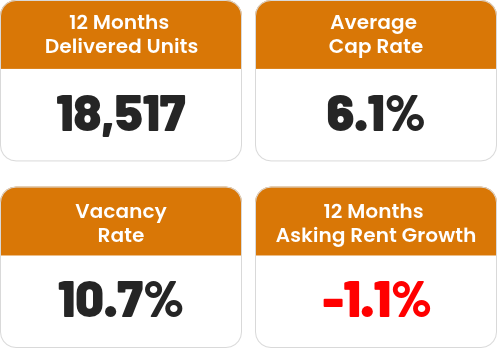
The Phoenix apartment market is showing early signs of recovery in 2026, with demand strengthening and new construction slowing. The Valley recorded 24,000 units of net absorption over the past 12 months, significantly above the pre-COVID average of 7,200 units. Meanwhile, 19,000 new units were delivered, marking the first time since 2021 that demand outpaced supply. As a result, overall vacancy improved from a peak of 12.6% to 10.7%. Units under construction have also declined by more than 50% to 16,000, although areas such as Downtown Phoenix, Tempe, and the Southwest Valley remain at risk of oversupply.
Despite these improvements, the market continues to face elevated vacancy and rental pressure. Average asking rents declined 1.1% year over year, while property owners continue offering aggressive concessions, including 10+ weeks of free rent at some newly built properties. Looking ahead, the shrinking construction pipeline should provide additional relief, with annual deliveries expected to return closer to pre-pandemic levels by 2027. Vacancy is expected to gradually improve, while rent declines should moderate and the potential for positive rent growth by the end of 2027 is increasing.
Phoenix MULTIfamily Market FAQ
1. What is the current state of the Phoenix multifamily market?
The Phoenix multifamily market is showing early signs of recovery in 2026. Demand has strengthened, while new construction has slowed, helping vacancy improve. However, the market is still working through the significant supply delivered over the past several years.
2. How strong is apartment demand?
The Valley recorded 24,000 units of net absorption over the past 12 months, significantly above the pre-COVID five-year average of 7,200 units. Demand is now outpacing new supply, which is a positive sign for market stabilization.
3. What is happening with vacancy?
Overall vacancy has improved from a peak of 12.6% to 10.7%. While this represents meaningful improvement, vacancy remains elevated compared with historical levels.
4. Is new construction slowing down?
Yes. There are currently about 16,000 units under construction, down more than 50% from the recent peak. However, Phoenix remains an active construction market, and some areas continue to face oversupply concerns, particularly Downtown Phoenix, Tempe, and the Southwest Valley.
5. What is happening with rents?
Average asking rents declined 1.1% over the past year. Owners are also using larger and more frequent concessions, including significant periods of free rent at some newly built properties, to attract residents.
6. What is the outlook for 2027?
The outlook is gradually improving as the construction pipeline continues to shrink. Vacancy is expected to modestly decline, while rent declines should become less severe. The market has a stronger prospect of returning to positive rent growth by the end of 2027.


